Deforestation is considered to be a contributor to global warming. It is often described as one of the major causes of the enhanced greenhouse effect.
Deforestation could account for up to one-third of the total anthropogenic (human impact on the environment) carbon dioxide emissions in tropical areas, according to the Intergovernmental Panel on Climate Change.
Scientists agree that Deforestation is a leading cause of global warming. It is responsible for producing 24% of global greenhouse gas emissions. They currently contribute about one-sixth of global carbon emissions when degraded or cleared.
Did you know that deforestation in tropical rainforests adds more carbon dioxide to the atmosphere than all of the cars and trucks on the world’s roads? As the Amazon rainforest continues to be cleared, there are fewer trees to capture the carbon and keep it in the ground and out of our atmosphere.
While you might think that rainforests are somewhere else on the planet, and therefore don’t affect those of us who live in North America or Europe, they are essential to our survival.
Deforestation: Invasive Species
Deforestation is occurring by other means as well, one of them being an increase in the number of invasive species of insects. Trees disappear daily because of highly destructive and invasive bugs such as the Mountain Pine Beetle (MPB), the Emerald Ash Borer , the Asian Long Horn Beetle, the Spruce Budworm, the Brown Spruce Long Horn Beetle, the Western Spruce Budworm, the Forest Tent Caterpillar, the Butternut Canker, and the Birch Leaf Miner.
The Mountain Pine Beetle (MPB) is considered a native species to Western Canada. It targets pine forests, and now, already considered the most destructive pest of pine forests in North America, it is considered an invasive pest.
Originally, small beetles prefer older trees, but as populations grow, pines that are much smaller are being targeted. And, populations are growing! Recently, the Mountain Pine Beetle has expanded the area in which it lives and thrives further north in British Columbia, north east into Alberta and south, down to Mexico.
One of the only natural ways to kill the beetle, is with consistently cold weather (-37 and colder). With climate change, rising temperatures are supporting growing beetle populations to the south and east.
The Emerald Ash Borer is another invasive species of bug that is destroying Ash trees across North America. It is thought to have been imported through the shipping of wooden pallets and other transportation packaging, from its natural habitats in China, Japan, Taiwan.
Canadian Forest Services report that 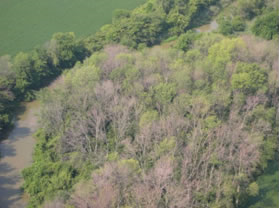 “Ash is an important component of stream-side habitats, and the loss of these trees will result in erosion of soils into streams and changes in water temperature with increased solar exposure. Gaps in the canopy of wooded areas, caused by ash tree mortality, will affect the micro climate of the forest required by some species and facilitate the invasion of exotic plant species. Ash loss will also result in reduced biodiversity of herbivores that depend on ash for food.”
The Asian Long Horn Beetle is another invasive pest that was originally imported from Asia, probably in wooden containers. It has targeted hardwood forests in North America and Europe, killing maples, poplars, birch, willow and elm trees. According to Canadian Forestry Services, this particular beetle “had no known natural enemies…[therefore] it represented a serious threat to Canada’s forests. It had the potential to lead to widespread tree loss in the urban landscape, impacts on the tourism and recreation industries, losses in the hardwood forest industry worth billions of dollars in wood products, losses in the multi-million-dollar maple syrup industry, significant damage to ecosystems, and the imposition of trade embargoes on Canadian forest products.”
There are numerous other invasive species of pests that are destroying trees and forests across North America and Europe. These are having an enormous impact on the environment, on climate change, on economic and political fronts including agricultural and manufacturing industries.
Wildfires
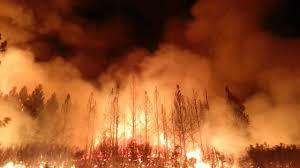
According to numerous reports, 2018 was the deadliest wildfire season ever in California. Wikipedia reports that more that more than “8,527 fires burning an area of 1,893,913 acres (766,439 ha), the largest amount of burned acreage recorded in a fire season, according to the California Department of Forestry and Fire Protection (Cal Fire) and the National Interagency Fire Center(NIFC), as of December 21. The fires have caused more than $3.5 billion (2018 USD) in damages, including $1.792 billion in fire suppression costs. Through the end of August 2018, Cal Fire alone spent $432 million on operations. The Mendocino Complex Fire burned more than 459,000 acres (186,000 ha), Lizard becoming the largest complex fire in the state’s history, with the complex’s Ranch Fire surpassing the Thomas Fire and the Santiago Canyon Fire of 1889 to become California’s single-largest recorded wildfire.
In Canada, we have had our own wildfires as well…