Issues
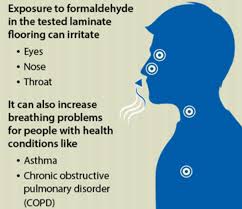 Composite wood products are a significant source of formaldehyde in indoor environments. Formaldehyde in indoor air can cause irritation of the eyes, nose and throat and can worsen asthma symptoms, especially in children.
Formaldehyde has been associated with cancer of the nasal passageways. Currently, there are no Government of Canada regulations that set out limits for the amount of formaldehyde that can be used in composite wood products imported, sold or offered for sale in Canada, or on the level of formaldehyde emissions that these products can give off. Testing indicates that some products currently imported and sold in Canada give off formaldehyde emissions that exceed the standard and could pose a risk to human health.
In order to help reduce health risks to Canadians, the Government of Canada is proposing the Formaldehyde Emissions from Composite Wood Products Regulations. These regulations, which would be enacted under the Canadian Environmental Protection Act, 1999 (CEPA), would place limits on the allowable formaldehyde emissions from composite wood products imported into, sold or offered for sale in Canada. These proposed regulations would align Canadian requirements for formaldehyde emissions with those requirements of the United States.
Background
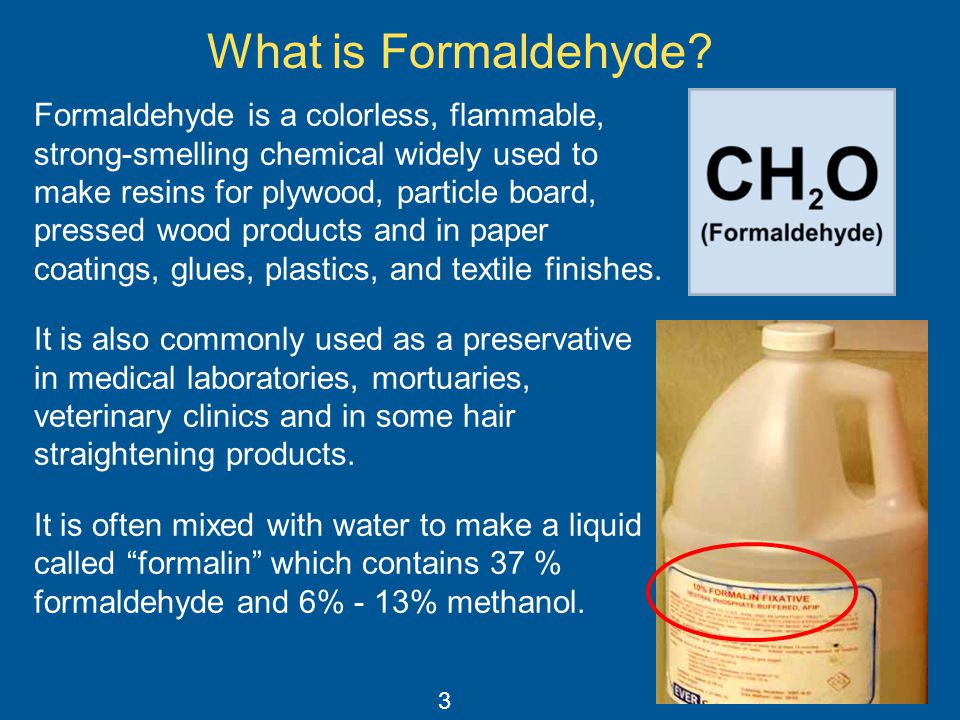
Formaldehyde is a colorless gas that has a wide variety of uses and sources. Some of the most significant formaldehyde sources include emissions from composite wood products and emissions generated by combustion. Other sources of formaldehyde in homes include paints and varnishes, glues, floor finishes and certain types of paper and cardboard.
The health effects of exposure to formaldehyde have been well studied. While very low levels of formaldehyde do not pose a health concern, elevated levels of formaldehyde exposure are known to cause a number of human health concerns. Short-term exposure to high levels of formaldehyde can cause acute health problems, including irritation of the eyes, nose and throat, and may worsen asthma symptoms, particularly in children. Long-term exposure to lower levels of formaldehyde may also result in chronic problems, including respiratory symptoms and allergic sensitivity in children. It has been shown that high levels of exposure to formaldehyde may lead to cancer of the nasal passageways. Formaldehyde has been classified as a Group I carcinogen (i.e. considered carcinogenic to humans) by the International Agency for Research on Cancer (IARC).
Formaldehyde has been used quite extensively in the manufacturing of composite wood products. Composite wood products are products that are made out of multiple smaller pieces of wood, glued together. The most well-known examples are plywood and particleboard., but other composite wood products exist, such as medium density fibreboard (MDF), as well as laminated wood products. Formaldehyde is often used as one of the chemicals in the glues that hold these composite wood products together. Over time, products that have been manufactured with formaldehyde-based glues and resins, give off formaldehyde emissions, which are at their highest when the products are newly manufactured, but they do decline over time.
Composite wood is used to make many products in Canadian homes, including use in furniture (especially the use of particleboard in inexpensive bookshelves and similar items), flooring, and wall paneling and trim. Off-gassing of formaldehyde from these products can be one of the main contributors to elevated formaldehyde levels and exposure in Canadian homes.
Imported composite wood products can have formaldehyde content and formaldehyde emission levels considerably higher than is typical of Canadian-made products. In 2017, Canada imported $280 million worth of wood kitchen cabinets and countertops, $300 million worth of wooden office furniture, and $1 billion worth of “other” wooden household furniture. Imports come primarily from the United States and China.
It is unknown what the formaldehyde content or emission rates are for imported composite wood products. The State of California, for example, has had a formaldehyde emission standard for composite wood products for some time and the U.S. Environmental Protection Agency (EPA) recently enacted a similar rule. It is expected that most U.S. imports would meet the California or EPA standard. However, imports from China and other overseas countries are expected to have higher formaldehyde emission levels than U.S. imports.